
Journal · 16 October 2026
Colour theory: the secret to enhancing an artwork
Discover how colour theory shapes the emotion and harmony of a painting, and how to use it in your own work.
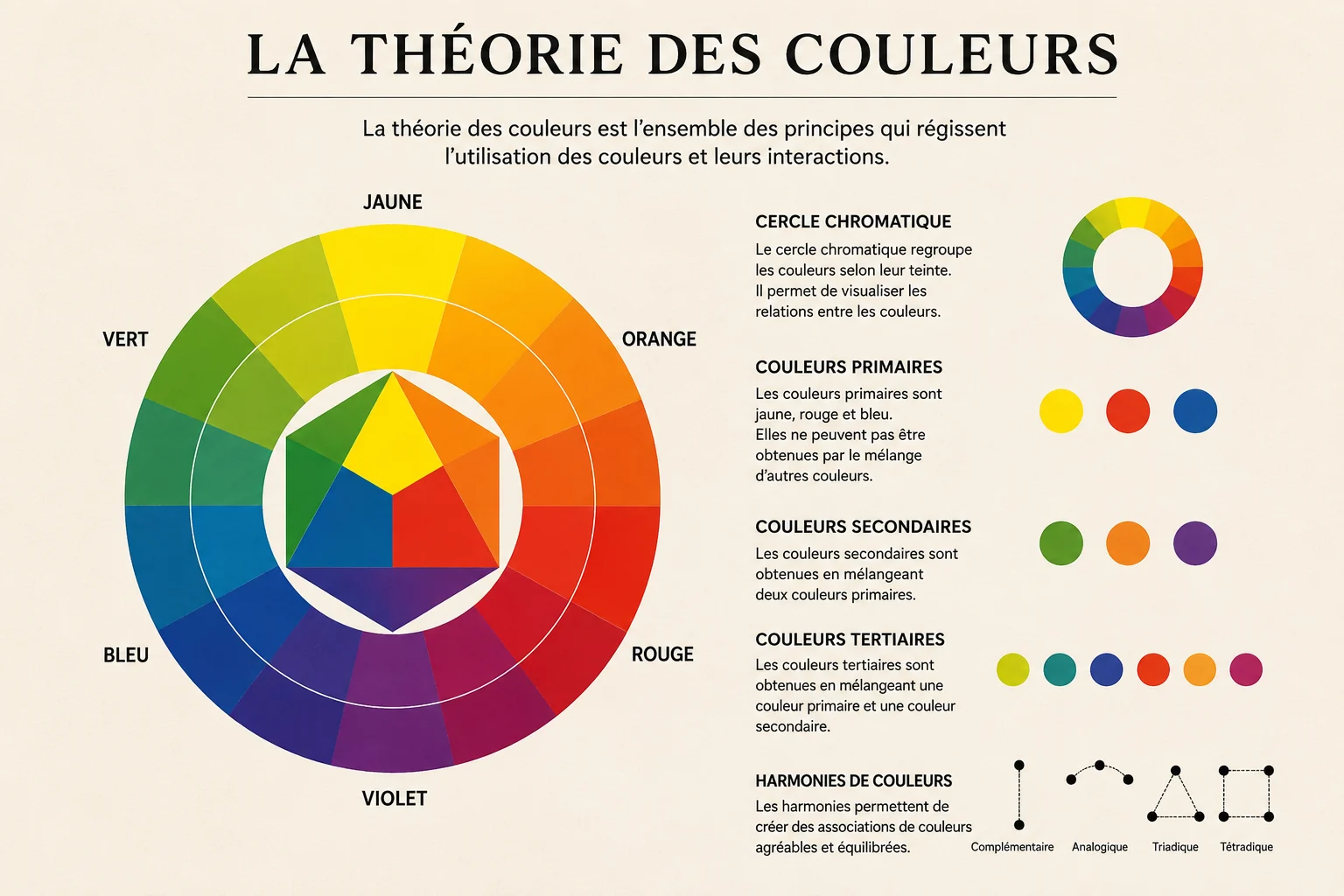
How does colour theory shape the emotion of a painting and the viewer’s experience?
The colour wheel, the basis of colour theory
The primary colours (red, blue, yellow) combine to create the secondary and tertiary colours. This visual organisation helps artists create harmony.
Complementary colours
Red and green, blue and orange, yellow and violet: these pairs create powerful contrasts and immediately catch the eye.
Analogous colours
Close together on the wheel, they bring softness and visual unity. Example: blue, blue-green, green.
The emotional impact of colour
Each colour carries a psychological meaning: blue soothes, red stimulates, green balances. The artist can therefore influence the viewer’s emotions.
Conclusion
Colour theory is much more than a technique: it is a universal visual language that conveys emotions and messages through an artwork.